Speyside Whisky: A Maker's Guide to Scotland's Largest Whisky Region
Updated: Jun 29

Speyside is a small corner of north east Scotland with the greatest concentration of whisky distilleries anywhere on earth. Around fifty distilleries sit clustered along the River Spey, between them making roughly half of all Scotch whisky, including three of the most famous names in the world: Glenlivet, Glenfiddich and Macallan. If Islay is about peat and the sea, Speyside is about fruit, honey and sherried oak. It is the home of elegant, approachable single malt.
Where is Speyside?
Speyside lies in the north east of Scotland, in the county of Moray, between the city of Inverness and the town of Aberdeen, taking its name from the fast-flowing River Spey that runs through its heart. Although it is technically part of the Highlands, the sheer number of distilleries packed into the Spey valley long ago earned it recognition as a region in its own right. Remarkably, most of those distilleries sit within an area only about fifteen miles wide. The same river that the distilleries draw on is also one of Scotland's great salmon rivers, and the surrounding glens, farmland and pine forest make it one of the prettiest parts of the country.
A short history of Speyside whisky
Whisky has been made in these glens for centuries, much of it illegally in the early days. The turning point came in 1824, when The Glenlivet became the first distillery in the area to take out a licence under a new law, a bold move at the time that helped bring distilling into the open. Others followed, and the Glenlivet name became so sought after that dozens of distilleries once added it to their own as a mark of quality. Through the 19th and 20th centuries the region grew into the powerhouse of Scotch whisky, helped by soft water, good barley and the arrival of the railway, which made it easy to send the whisky south. Today Speyside is the beating heart of single malt, and its distilleries range from global giants to tiny, traditional operations.

The distilleries of Speyside
With around fifty distilleries, Speyside has far more than any other region, and a remarkable variety within them.
The Glenlivet is the largest by volume and one of the most historic, the distillery that started it all in 1824, known for clean, fruity, approachable whisky. Glenfiddich is the best-selling single malt in the world, family-owned and hugely influential in making single malt popular beyond Scotland. The Macallan is the prestige name, famous for rich, sherried whisky matured in carefully sourced oak, and for some of the most valuable bottles ever sold at auction.
Beyond the big three, the region is full of treasures. Mortlach, the "Beast of Dufftown", is prized for its meaty, complex spirit. Aberlour, Balvenie, Glenfarclas and GlenDronach are loved for their sherried richness, while Aultmore, Benromach, Tamdhu, Strathisla and Glen Grant each have devoted followings. Strathisla, with its twin pagoda roofs, is one of the most photographed distilleries in Scotland and the spiritual home of Chivas Regal.
Many of these are distilleries whose casks I reclaim and bring back to life, Macallan, Glenfiddich, Glenlivet, Aultmore, Tamdhu, Benromach, Mortlach and Strathisla among them.
What does Speyside whisky taste like?
Where Islay is smoke and brine, Speyside is fruit and honey. The classic Speyside profile is sweet, smooth and elegant, with very little peat. Expect orchard fruit like apple and pear, dried fruit, honey, vanilla and a gentle nuttiness, often with a warming note of spice from the oak. Sherry casks play a big part here, and they give many Speyside malts their deeper, richer side: think raisins, dark sugar, Christmas cake and chocolate, seen at its finest in a distillery like Macallan. Bourbon casks, by contrast, bring out the lighter, fruitier, more honeyed style of malts like Glenlivet. That balance of elegance and richness, almost never overshadowed by smoke, is exactly why Speyside is so often recommended as the place to begin with single malt.

How to visit Speyside, and make the most of it
Speyside is the easiest of the great whisky regions to tour, because so much is packed into so small an area. Here is what helps.
Getting there. The usual gateway is Inverness, around an hour's drive from the heart of Speyside and well connected by road, rail and air. Aberdeen is a similar distance from the eastern side. Once you arrive a car is by far the easiest way to get around, as the distilleries are spread across country roads, though you will want a designated driver, and most distilleries will prepare a "driver's dram" to take away.
The Malt Whisky Trail. Speyside is home to the world's only Malt Whisky Trail, a signed route linking a string of working distilleries along with the historic Dallas Dhu and the Speyside Cooperage, where you can watch casks being built and repaired by hand. It is the simplest way to plan a tour without missing the highlights.
When to go. Late spring to early autumn brings the best weather. The big event is the Spirit of Speyside Whisky Festival, held over several days in early May, with tastings, tours and special bottlings across the region. As always, book accommodation and the popular events well ahead.
Where to stay, and how long. The towns of Dufftown, Aberlour, Craigellachie and Rothes sit right among the distilleries and make ideal bases, with Dufftown alone home to several. Give yourself three or four days to tour a handful of distilleries at a relaxed pace, with time for the cooperage and the countryside.
Beyond the whisky. The area is beautiful in its own right. There is salmon fishing on the Spey, walking and cycling on the Speyside Way, the castles and coastline of Moray, and easy access to the Cairngorms National Park to the south. It is a region to slow down and enjoy.
From cask to keepsake: bringing Speyside home
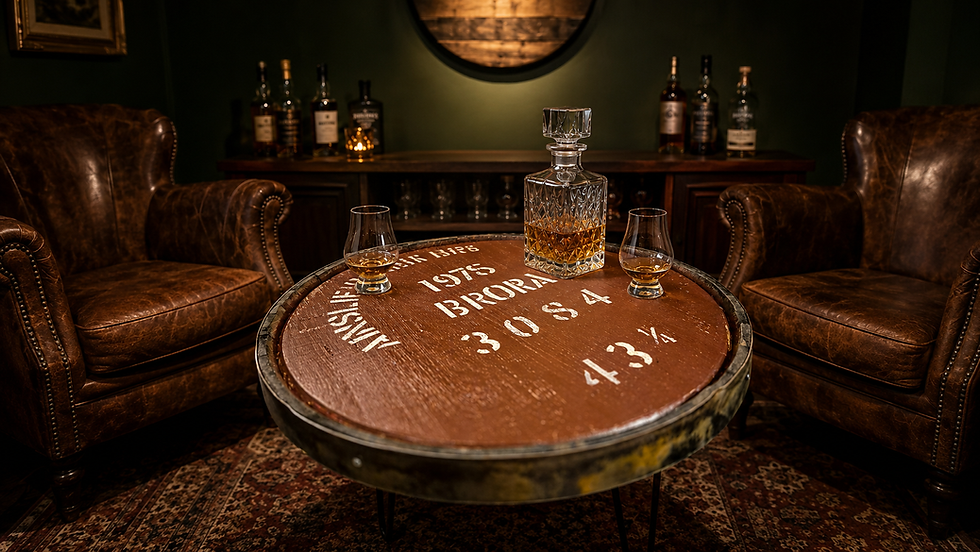
When a Speyside cask has given its last drop, its story does not have to end. I reclaim genuine casks from Speyside distilleries and give the oak a second life as handmade lighting, wall art and home décor. Each piece keeps the distillery's own markings, the cask number and the char of the spirit it once held. A Macallan or Glenfiddich barrel head on the wall, a Glenlivet or Mortlach stave sign, a pendant light built from a reclaimed Speyside cask: it is a way to keep a piece of Scotland's most famous whisky region in your home, long after the bottle stands empty. Every cask is one of a kind, and so is every piece I make from it. There is only ever one.

Speyside whisky FAQ
How many distilleries are in Speyside?
Around fifty, the most of any Scotch whisky region, all clustered within a small area around the River Spey. Together they make roughly half of all Scotch whisky.
What does Speyside whisky taste like?
Typically sweet, smooth and fruity, with apple, pear, honey, vanilla and spice, and very little peat. Sherry-matured Speyside malts add richer notes of dried fruit, dark sugar and chocolate.
Why is Speyside its own whisky region?
It is technically part of the Highlands, but the sheer concentration of distilleries and its distinctive fruity, sherried style mean it is recognised as a region in its own right.
Is Speyside whisky good for beginners?
Yes. Its smooth, fruity, lightly peated character makes it one of the easiest styles to enjoy, which is why malts like Glenlivet 12 and Glenfiddich 12 are such common starting points.
How do you get to Speyside?
Most visitors arrive via Inverness or Aberdeen, both around an hour away by road, then explore by car. The signed Malt Whisky Trail links many of the key distilleries.
Are your products made from real Speyside casks?
Yes. I reclaim genuine casks from Speyside distilleries and craft them by hand, keeping the original distillery markings and cask numbers wherever they survive.
Explore Scotland's whisky regions
Scotland's single malt is shaped by where it is made. Each region has its own landscape, distilleries and character. If you enjoyed this guide, explore the rest of the series:
Explore the collection
Every piece I make is one of a kind, worked by hand from a single reclaimed cask. If a particular distillery means something to you, get in touch about a bespoke or personalised piece.
Whisky barrel heads (cask ends): https://www.barrelcraftstudio.co.uk/category/whisky-barrel-heads
Whisky barrel stave wall art: https://www.barrelcraftstudio.co.uk/category/wall-decor-barrel-staves
Whisky barrel pendant lights: https://www.barrelcraftstudio.co.uk/category/ceiling-lights
Distillery names are used descriptively to identify the origin of the reclaimed oak. Barrel Craft Studio is an independent maker, not affiliated with, endorsed by or sponsored by any distillery.


Comments