Campbeltown Whisky: A Maker's Guide to Scotland's Smallest Whisky Region
Updated: Jun 28
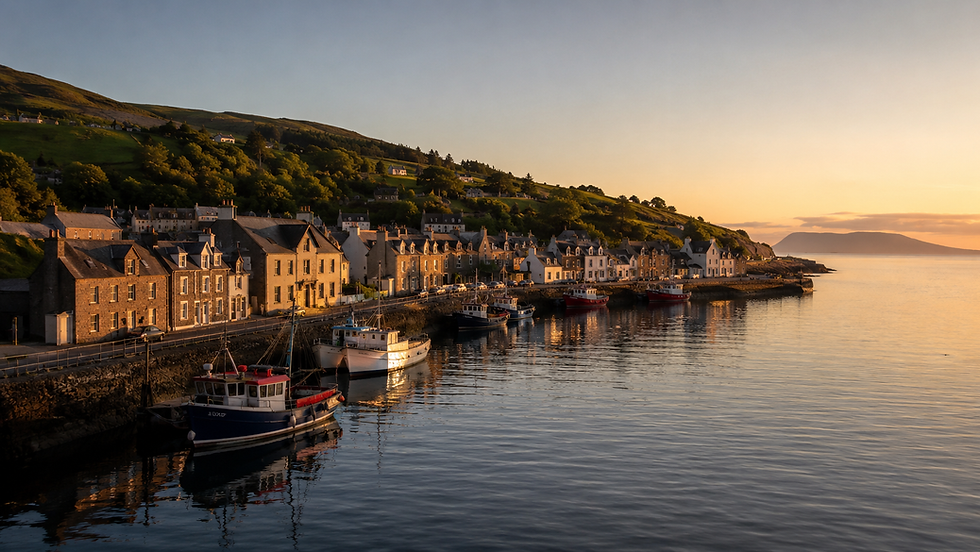
Campbeltown is a small harbour town on the Kintyre peninsula in the south west of Scotland, and one of the country's five protected whisky regions. It was once the whisky capital of the world, with more than thirty distilleries crammed into a single town. Today just three remain: Springbank, Glen Scotia and Glengyle. Their whiskies are robust, briny and full of character, and they have made Campbeltown one of the most cherished names in all of Scotch.
Where is Campbeltown?
Campbeltown sits near the southern tip of the long Kintyre peninsula, on the west coast of Scotland, looking out over Campbeltown Loch towards the Isle of Arran. Locals call it the "Wee Toon". It is one of only five officially recognised whisky regions in Scotland, alongside Speyside, the Highlands, the Lowlands and Islay, which is remarkable for a place this size. Getting there is part of the charm: it is a long and beautiful drive down the peninsula from Glasgow, around three hours by road, with sea on both sides for much of the way.
A short history of Campbeltown whisky
In the 19th century, Campbeltown was the beating heart of the whisky world. At its peak the town was home to more than thirty distilleries, packed along its streets and harbour, and its location made it perfect for shipping whisky out to Glasgow and beyond. The town grew wealthy on whisky, and for a time no place on earth made more of it.
The decline, when it came, was steep. A mix of overproduction, a reputation for cutting corners on quality, the loss of key markets and the arrival of Prohibition in America saw distillery after distillery close through the early 20th century. By the 1930s the number had collapsed from dozens to a mere handful, and for much of the century only two survived: Springbank and Glen Scotia. That Campbeltown kept its status as a whisky region at all is down to sheer stubbornness and the quality of what the survivors made.

The three distilleries of Campbeltown
For so small a town, Campbeltown punches far above its weight. Three distilleries are active today.
Springbank is the most famous, and one of the most traditional distilleries in all of Scotland. Owned by J & A Mitchell since 1828, it still does everything on site, from malting its own barley on traditional floors to bottling, a rarity almost unheard of elsewhere. Springbank produces three distinct single malts: Springbank itself, the lightly peated and triple-distilled Hazelburn, and the heavily peated Longrow. Its whiskies are prized by collectors the world over.
Glen Scotia, founded in 1832, is the quieter neighbour, but no less worthy. After weathering the lean years it has re-emerged as a respected single malt in its own right, making both peated and unpeated styles, with its higher-strength Victoriana bottling a particular favourite.
Glengyle is the new chapter. Originally founded in 1872 and closed in 1925, it was brought back to life in 2004 by the owners of Springbank, the first new distillery in the region for over 125 years. Because its name was no longer available for a whisky, its single malt is sold under the name Kilkerran, after the early settlement of Saint Kerran on whose land the town was founded.
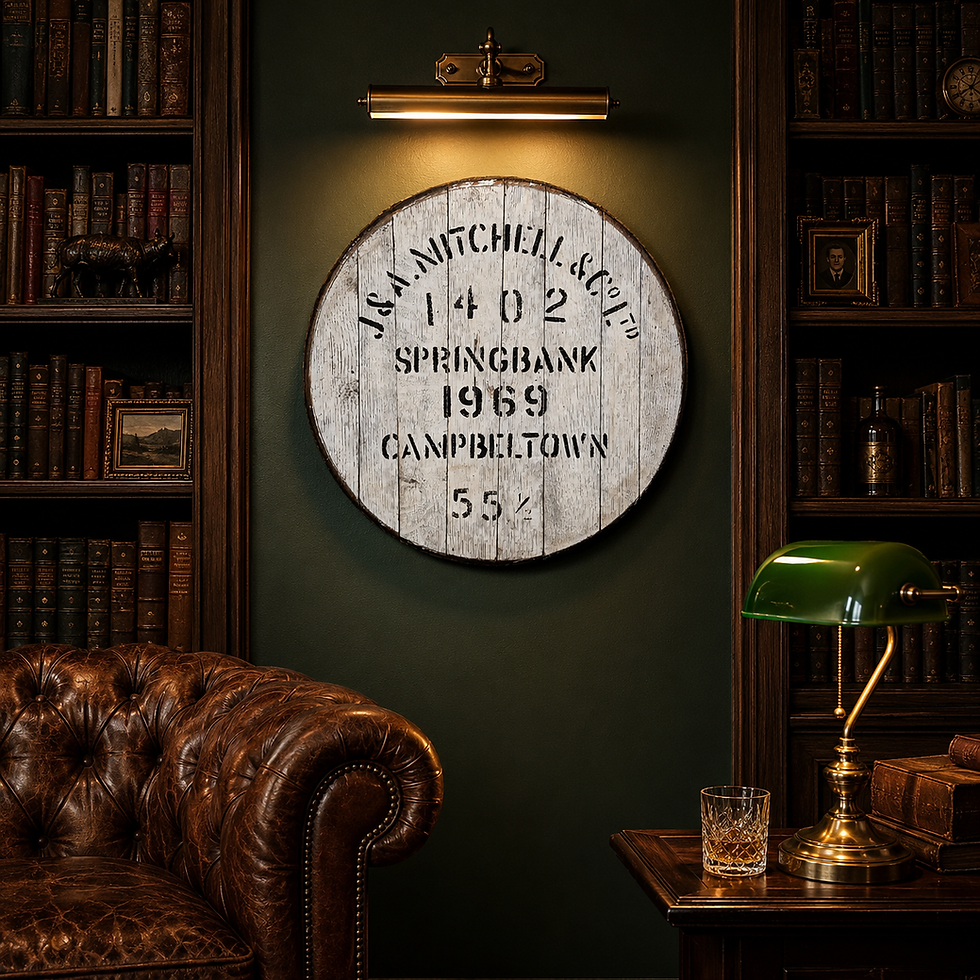
Springbank is one of the distilleries whose casks I reclaim and bring back to life, so a piece of Campbeltown's living history can hang on your wall.
What does Campbeltown whisky taste like?
Campbeltown has a flavour all of its own, which is exactly why it earns its place as a separate region. The classic profile is robust and full-bodied, with a distinct maritime, briny quality, a whiff of sea salt that comes from its harbour setting. Around that you will often find rich fruit, vanilla and toffee sweetness, a little smoke, and on some bottlings an oily, almost industrial depth that fans describe as "funk". It is a bigger, earthier dram than a soft Speyside malt, yet rounder and more layered than the fierce peat of Islay. If Islay is all bonfire and brine, Campbeltown is salt, fruit and old oak. Springbank's Longrow leans smoky, Hazelburn is gentle and unpeated, and Glen Scotia spans both, so the region rewards anyone willing to explore.

How to visit Campbeltown, and make the most of it
Campbeltown is more off the beaten track than Islay or Speyside, which is part of its appeal. Here is what helps.
Getting there. The town lies at the foot of the Kintyre peninsula. Most visitors drive from Glasgow, a journey of around three hours along the A83, with the sea in view for much of the route. There is also a small airport at Machrihanish with flights from Glasgow, and a seasonal ferry across to Arran and on to the mainland, which makes a scenic loop possible. Fill the tank before you set off, as services thin out the further south you go.
Plan your distillery visits. With only three distilleries, you can see them all in a couple of days, but book tours in advance, as places are limited and the Springbank tours in particular sell out. Springbank's hands-on tours are among the best in Scotland for seeing traditional production up close. Cadenhead's, Scotland's oldest independent bottler, is also part of the same family and well worth a visit.
When to go. Late spring and summer offer the kindest weather. The highlight of the year is the Campbeltown Malts Festival, held over a week in May, when Springbank, Glen Scotia and Glengyle run open days, warehouse tastings and special festival bottlings. It is a wonderful, intimate alternative to the bigger island festivals, but beds book up fast, so plan well ahead.
Where to stay, and how long. The town itself has hotels, inns and guest houses, and makes a comfortable base. Give yourself two or three days: enough for the distilleries, a walk around the harbour and time to enjoy the wider peninsula.
Beyond the whisky. Kintyre is gorgeous. There are sweeping beaches at Machrihanish, the tidal island of Davaar with its hidden cave painting, golf, sea views across to Arran, and the long single-track roads that inspired Paul McCartney's "Mull of Kintyre", written at his farm nearby. Pack for changeable weather and take your time.
From cask to keepsake: bringing Campbeltown home
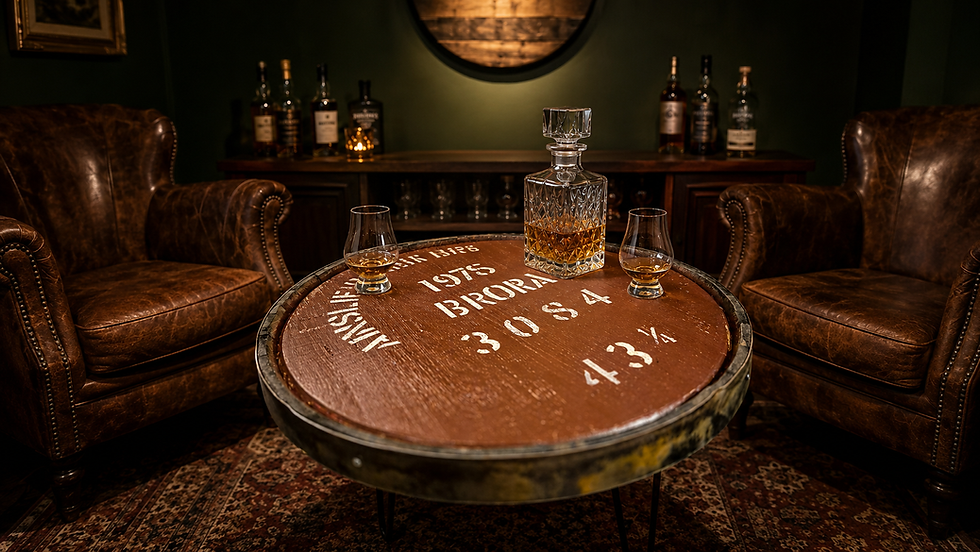
When a Campbeltown cask has given its last drop, its story does not have to end. I reclaim genuine casks from Scotch distilleries, including Springbank, and give the oak a second life as handmade lighting, wall art and home décor. Each piece keeps the distillery's own markings, the cask number and the char of the spirit it once held. A Springbank barrel head on the wall or a stave sign above the bar is a way to own a piece of the Wee Toon's remarkable story, long after the bottle stands empty. Every cask is one of a kind, and so is every piece I make from it. There is only ever one.
Campbeltown whisky FAQ
How many distilleries are in Campbeltown?
Three are active today: Springbank, Glen Scotia and Glengyle (whose single malt is sold as Kilkerran). The town once had more than thirty.
Why is Campbeltown its own whisky region?
Because its whiskies have a distinct character, briny, robust and full-bodied, and because of its long distilling heritage. It remains one of Scotland's five protected whisky regions despite having only three distilleries.
What does Campbeltown whisky taste like?
Expect a robust, full-bodied dram with sea salt and brine, fruit, vanilla and toffee, often a little smoke, and sometimes an oily depth. It sits between the softness of Speyside and the heavy peat of Islay.
Why is Kilkerran not called Glengyle?
The Glengyle name was already in use for a different bottling, so when the distillery was revived in 2004 its single malt was named Kilkerran instead, after the area's early settlement.
How do you get to Campbeltown?
By road it is about a three-hour drive from Glasgow down the Kintyre peninsula on the A83. There are also small flights from Glasgow to Machrihanish and a seasonal ferry via Arran.
Are your products made from real Campbeltown casks?
Yes. I reclaim genuine casks from Scotch distilleries, including Springbank, and craft them by hand, keeping the original distillery markings and cask numbers wherever they survive.
Explore Scotland's whisky regions
Scotland's single malt is shaped by where it is made. Each region has its own landscape, distilleries and character. If you enjoyed this guide, explore the rest of the series:
Explore the collection
Every piece I make is one of a kind, worked by hand from a single reclaimed cask. If a particular distillery means something to you, get in touch about a bespoke or personalised piece.
Whisky barrel heads (cask ends): https://www.barrelcraftstudio.co.uk/category/whisky-barrel-heads
Whisky barrel stave wall art: https://www.barrelcraftstudio.co.uk/category/wall-decor-barrel-staves
Whisky barrel pendant lights: https://www.barrelcraftstudio.co.uk/category/ceiling-lights
Distillery names are used descriptively to identify the origin of the reclaimed oak. Barrel Craft Studio is an independent maker, not affiliated with, endorsed by or sponsored by any distillery.


Comments