Cask Strength Whisky Explained: What It Means and When to Add Water

A cask strength label can look daunting when its ABV is much higher than the bottles you usually buy. Think of it as more room to choose how your dram tastes. You can try a small sip as bottled, add water little by little and stop where it suits you. The number tells you about bottling strength; it does not grade the whisky.
What happens between cask and bottle
Scotch must be bottled at a minimum of 40% ABV. Many whiskies are reduced with water before bottling to reach a chosen strength. A cask strength release retains the cask's alcoholic strength at bottling, which can differ between casks and batches. The Scotch Whisky Association describes the term as a traditional, informative way of identifying this difference, while cautioning against promoting higher strength as a virtue in itself.
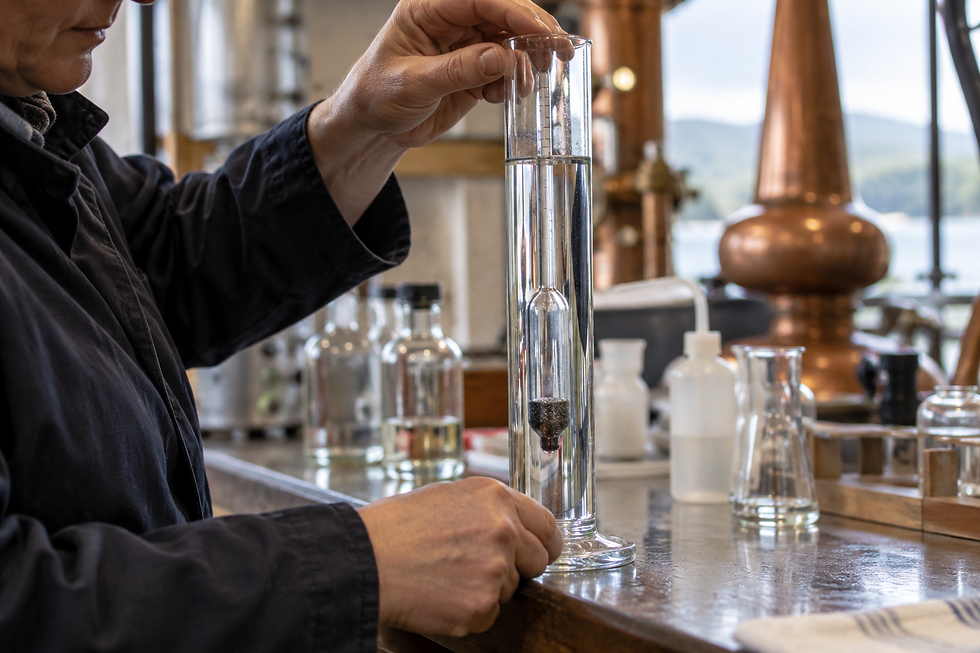
Do not confuse “cask strength” with “single cask”. The first concerns strength; the second concerns cask source. A vatting of several casks can be presented at cask strength, and a single cask can be bottled after reduction. Check the actual label and bottler's details.
That distinction matters in a shop. A bottle marked single cask may have come from just one vessel but still be reduced with water before bottling. A cask strength release can combine several casks and retain the resulting strength. Look for both statements separately, then read the actual ABV. If you are comparing prices, remember that a stronger dram may be served in a smaller pour, but it is still the flavour and occasion that should guide your choice.
At home, a teaspoon or dropper is enough. Add water in small steps to a modest measure, gently swirl and wait a moment before smelling again. Note whether fruit, spice or oak seems easier to notice and whether the texture changes. If the whisky becomes too dilute for your taste, the next pour gives you a fresh starting point. You are learning your own preference, not trying to reach a compulsory number.
How to taste it thoughtfully
Pour a small sample and give it time. Nose gently rather than taking a deep breath directly above the glass. Take a tiny sip and notice texture and flavours without trying to push through alcohol heat. Then add a few drops of clean water, wait and compare. You can repeat in stages until the balance suits you.

The exact amount is a matter of preference and of the individual whisky. Water can change the intensity and accessibility of aromas, but more is not automatically better. If you want a controlled experiment, divide a measure between two matching glasses and leave one untouched. Keep the glassware, temperature and waiting time similar.
An advanced comparison is to calculate how much water would bring a sample toward a particular ABV, then test a second concentration. Measurements help repeat the experiment, but your palate still makes the decision. Ice adds both cooling and dilution over time, making the comparison less controlled.
A controlled dilution example
Suppose you pour 10 ml of whisky at 60% ABV. Adding about 5 ml of water would bring the simple volume calculation toward 40% ABV: 10 × 60 ÷ 15 = 40. Real mixtures can show small volume contraction, so this is a tasting guide, not a laboratory measurement. Start with much less water and move gradually. You may prefer the whisky at a strength well above 40%, or you may find that a very small addition opens its aroma enough.

Use a second untouched glass as your reference. At each stage, note whether alcohol heat, texture, sweetness and finish change. A higher ABV can carry a different balance of compounds into the glass; dilution changes both concentration and perception. It is common to discover that the most pleasant nose and palate occur at different points. There is no need to force a single “ideal” dilution.
When sharing the bottle, give guests the choice of water. The point of a cask strength release is that it gives you room to explore, not that it obliges anyone to drink a stronger serving.
Strength is one part of a larger picture
Spirit character, cask history, maturation and presentation all affect what you taste. A 46% whisky can feel more expressive than a higher-strength one; numerical ABV is not a score. Read the age, cask and filtration claims separately, and avoid assuming that every high-strength release is rare or “pure”.
At my workshop near Loch Lomond, I keep the practical side of a dram in mind. A reclaimed oak Edradour whisky glass holder gives your glass a place during a slow comparison and connects the ritual to the actual cask material. The wood's marks describe an object, not the strength or taste of the whisky in your glass. Browse my handmade cask oak pieces if you are making a thoughtful tasting space.

Common questions
Must cask strength whisky be drunk neat?
No. Try it neat if you wish, then add water until it tastes good to you.
Is cask strength always one exact ABV?
No. The strength can differ among casks and bottlings; read the number on your bottle.
Is higher ABV always more flavourful?
No. Perceived flavour depends on the whisky and how you serve it, not the number alone.
Sources and further reading
SWA responsible marketing code, cask strength description · SWA FAQs · SWA tasting toolkit · Photo: Paweł Mazurek KRK / Wikimedia Commons, CC BY-SA 4.0 (unmodified; Aberlour A'bunadh Batch 59). Image source


Comments