Highland Whisky: A Maker's Guide to Scotland's Largest and Most Varied Whisky Region
Updated: Jun 29

The Highlands is the largest whisky region in Scotland by far, covering most of the country north of the central belt. With such a vast area come the most varied whiskies of all: from light and floral to rich and sherried, from honeyed and coastal to full-bodied and smoky. It is home to famous names like Glenmorangie, Dalmore and Oban, and, depending on how you count, to the Islands too. If you want to understand the sheer range of Scotch, the Highlands is where to start.
Where are the Highlands?
The Highlands cover everything north of the line that separates them from the Lowlands, which runs roughly from the Clyde in the west to the Tay in the east, all the way up to the far north coast. It is an enormous area of mountains, glens, lochs, rivers and coastline, and that geography is exactly why Highland whisky is so hard to pin down to a single style. To make sense of it, the region is usually divided into four sub-regions: north, south, east and west. The whisky-producing Islands, scattered off the west and north coasts, are also officially counted as part of the Highlands.
A short history of Highland whisky
The Highlands are the romantic heart of Scotch whisky, the landscape most people picture when they think of the spirit. For centuries whisky was made here in small farm stills, much of it illegal, hidden away in remote glens far from the taxman. A defining moment came in 1784, when the Wash Act drew a line across the country and taxed Highland and Lowland distilleries differently, cementing two distinct whisky-making traditions. Highland stills were smaller, producing a richer, heavier spirit than the lighter Lowland style. As licensing spread in the 19th century, the great Highland distilleries we know today grew up across this huge area, each shaped by its own local water, climate and landscape.

The sub-regions and distilleries of the Highlands
Because the Highlands are so large, it helps to think of them in parts. With more than thirty distilleries on the mainland alone, there is a lot to explore.
The Northern Highlands produce some of the richest, fullest single malts, often with a honeyed, cereal-sweet or gently coastal character. This is the home of Glenmorangie, Dalmore, Clynelish, Balblair and Old Pulteney.
The Eastern Highlands lean drier and fruitier, with a lighter touch closer to the Lowland style, seen in distilleries like GlenDronach, famous for its sherried richness, Fettercairn and Glencadam.
The Southern Highlands, just north of the central belt, tend towards lighter, gentler, fruitier malts, with names such as Aberfeldy, Glengoyne, Deanston, Tomatin, Edradour and Tullibardine.
The Western Highlands are smaller in number but make fuller-bodied, sometimes smokier whiskies with a coastal edge, led by Oban and Ben Nevis.
Macduff, near the Moray coast, sits among these mainland Highland names too. Many of these are distilleries whose casks I reclaim and bring back to life, Clynelish, Deanston, Macduff, Edradour, Tomatin and Glenmorangie among them.
What about the Islands?
The Islands deserve a special mention. Scattered off Scotland's west and north coasts, islands such as Skye, Mull, Jura, Arran and Orkney all make whisky, and although they are officially treated as part of the Highlands, many enthusiasts think of them as a region in their own right. Island whiskies often share a maritime, salty character, frequently with a thread of peat smoke. Talisker on Skye is the largest and best known, while Orkney is home to two distilleries, Scapa and the celebrated Highland Park. One important point: Islay, with its own intense peated style, is always treated as a separate region, never lumped in with the Islands.
What does Highland whisky taste like?
The honest answer is that Highland whisky tastes of almost everything, which is exactly its appeal. Because the region is so large and varied, there is no single Highland style. As a broad guide, expect medium to full-bodied malts that are less smoky than Islay but with more weight than the Lowlands: think heather and honey, dried and orchard fruit, malt and cereal, a warming spice from the oak, and often a coastal or lightly smoky edge depending on where the distillery sits. A northern Glenmorangie is fragrant and citrussy, a Dalmore rich and chocolatey, a sherried GlenDronach deep and fruity, an Oban rounded and coastal. The Highlands are the region for anyone who wants to taste the full breadth of what Scotch can be.

How to visit the Highlands, and make the most of it
The Highlands are vast, so a little planning goes a long way.
Getting there. Inverness is the natural gateway to the northern Highlands, while Glasgow and the southern Highlands are easily reached from the central belt. A car is essential here, as the distilleries are spread across long, scenic distances, so plan your route and always arrange a designated driver.
Pick an area, not the whole map. You cannot see the Highlands in one trip, so choose a corner. The North Coast 500 route links many northern distilleries with spectacular coastal scenery; Perthshire in the south is an easy, distillery-rich base from the central belt; and the west coast pairs whisky with some of Scotland's most dramatic landscapes.
When to go. Late spring to early autumn brings the best weather and road conditions, though the Highlands are stunning year round. Many distilleries run their own tours and events, so check ahead and book the popular ones.
Beyond the whisky. This is some of the finest scenery in Europe: Loch Ness and the Great Glen, Glencoe, the Cairngorms, castles, mountains and the long road north. Whisky here is part of a much bigger journey.
From cask to keepsake: bringing the Highlands home
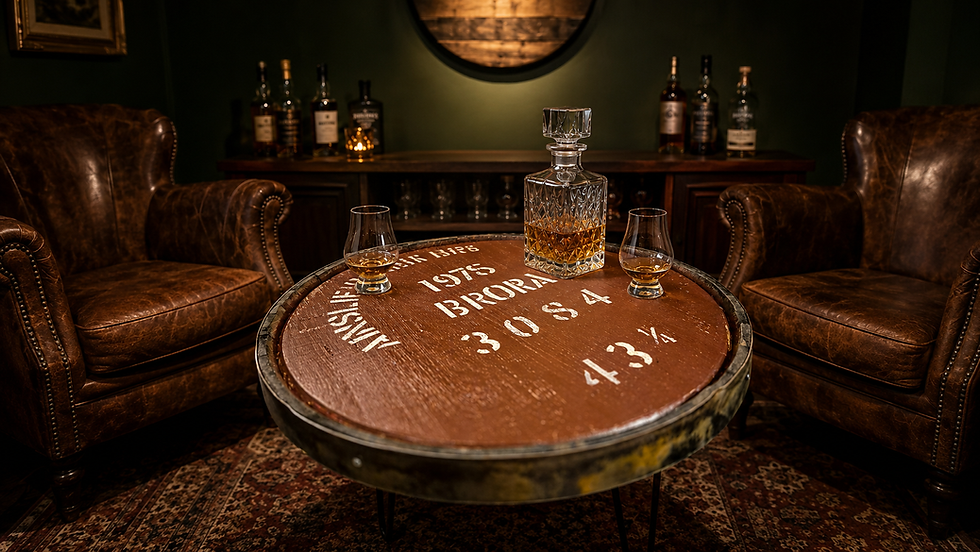
When a Highland cask has given its last drop, its story does not have to end. I reclaim genuine casks from Highland distilleries and give the oak a second life as handmade lighting, wall art and home décor. Each piece keeps the distillery's own markings, the cask number and the char of the spirit it once held. A Clynelish or Deanston barrel head on the wall, an Edradour or Tomatin stave sign, a pendant light built from a reclaimed Highland cask: it is a way to keep a piece of Scotland's grandest whisky region in your home, long after the bottle stands empty. Every cask is one of a kind, and so is every piece I make from it. There is only ever one.

Highland whisky FAQ
What does Highland whisky taste like?
There is no single style, because the region is so large. As a guide, expect medium to full-bodied malts with heather, honey, fruit, malt and spice, less smoky than Islay but weightier than the Lowlands, sometimes with a coastal or lightly smoky edge.
How many distilleries are in the Highlands?
More than thirty on the mainland, plus the Island distilleries, making it the largest region by area and one of the biggest by output, producing close to a quarter of Scotland's malt whisky.
What are the Highland sub-regions?
The mainland is usually split into northern, eastern, southern and western Highlands, each with its own broad style. The whisky Islands are also officially part of the Highlands.
Are the Islands part of the Highlands?
Officially yes. Islands such as Skye, Mull, Jura, Arran and Orkney are counted within the Highlands, though many people treat them as their own region. Islay, however, is always separate.
Is Highland whisky good for beginners?
Yes. A classic Highland malt like Glenmorangie or Dalmore is often recommended as an approachable starting point, with plenty of fruit and spice and little or no heavy peat.
Are your products made from real Highland casks?
Yes. I reclaim genuine casks from Highland distilleries and craft them by hand, keeping the original distillery markings and cask numbers wherever they survive.
Explore Scotland's whisky regions
Scotland's single malt is shaped by where it is made. Each region has its own landscape, distilleries and character. If you enjoyed this guide, explore the rest of the series:
Explore the collection
Every piece I make is one of a kind, worked by hand from a single reclaimed cask. If a particular distillery means something to you, get in touch about a bespoke or personalised piece.
Whisky barrel heads (cask ends): https://www.barrelcraftstudio.co.uk/category/whisky-barrel-heads
Whisky barrel stave wall art: https://www.barrelcraftstudio.co.uk/category/wall-decor-barrel-staves
Whisky barrel pendant lights: https://www.barrelcraftstudio.co.uk/category/ceiling-lights
Distillery names are used descriptively to identify the origin of the reclaimed oak. Barrel Craft Studio is an independent maker, not affiliated with, endorsed by or sponsored by any distillery.


Comments