Blended Whisky vs Single Malt: Taste, Quality and Price

For anyone comparing blended whisky vs single malt, the key differences come down to how each whisky is made, how flavours are built and what you are actually paying for. Single malt gets a lot of attention. Blended whisky sometimes gets overlooked. Yet both can be enjoyable, and neither name tells you everything about the taste. So what sets them apart? Let's look at how they are made, what they cost and, above all, what you might enjoy drinking.
This guide is about Scotch whisky. Other countries have their own rules and styles. We will compare production, flavour, quality and price, then show you an easy way to taste a blend and a single malt side by side.
Blended whisky vs single malt: what's the difference?
Single malt Scotch comes from one distillery. It is made from malted barley and water, and distilled in copper pot stills. Blended Scotch combines single malt whisky with single grain Scotch whisky. The whiskies are made separately, then brought together to create the final drink.
There is a third name to watch for: blended malt. It combines single malts from different distilleries, without grain whisky. If a label says 'blended', read the full description to see which kind it is.
Both single malt and blended Scotch must mature in oak casks in Scotland for at least three years. The grain whisky in a blend is aged Scotch whisky too. It is an important part of the drink.
How is single malt made?
First, barley is allowed to sprout and is then dried. It is ground and mixed with hot water to draw out its sugars. Yeast turns those sugars into alcohol. At this stage, the liquid is ready for distillation.
Copper pot stills heat the liquid in batches. Their shape and the way they are run help give the spirit its character. Fermentation, distillation and time in the cask all affect the flavour. Barley is only part of the story.
Next, the spirit rests in oak casks. The type of cask, what it held before and the time spent in it all make a difference. That is why two whiskies from the same distillery can taste quite different.
For many drinkers, that is the fun of single malt. You can try several bottles from one distillery and notice what they share. One may be light and fruity, another richer or smokier, while both still reflect the same maker.

How is blended Scotch made?
A blend starts with whiskies made separately. Its malt whisky is made in pot stills. Its grain whisky is often made from cereals such as wheat or maize, along with malted barley, and is usually distilled in tall column stills. This method can produce whisky on a larger scale.
Grain whisky often gives a blend a lighter base, but it has flavours of its own, especially after years in a cask. It does more than help set the price.
The blender chooses whiskies that work well together. One may add fruit, another sweetness, and another a hint of smoke. The goal is a drink that tastes balanced and enjoyable.
The blender also tries to keep a familiar bottle tasting familiar. Casks vary from year to year, so that takes skill. Johnnie Walker describes blending as both creating flavour and keeping a consistent house style.
Single malt makers also combine whisky from different casks to create a bottle with a consistent taste. Those casks all come from the same distillery. In both categories, people make careful choices about the final flavour.
Can you taste the difference?
Sometimes, but there is no simple rule. Some blends are smoky and bold. Some single malts are soft and delicate. The individual bottle tells you more than the category on its label.
Think about what you notice in the glass. Is there smoke, fruit, vanilla, spice or a cereal note? Does it feel light or rich? Do you enjoy the taste that lingers after a sip? Those questions help you learn what you like.
People also use the word 'smooth' in different ways. They may mean gentle, sweet or low in alcohol heat. When you ask for a smooth whisky, say what you like and what you would rather avoid. That makes it easier to find a bottle that suits you.

Is single malt better quality?
The words 'single malt' and 'blend' do not tell you whether a whisky is good. Take a sip and ask: do the flavours work well together? Do I enjoy the taste? Would I pour another small glass? A whisky does not need a long list of tasting notes to be satisfying.
A strong flavour can be exciting, but strength of flavour is not the same as quality. A gentle whisky can be beautifully balanced. What matters is how the flavours come together and whether you enjoy them.
You can admire the work behind a whisky and still prefer another bottle. You can also enjoy an affordable blend without having to justify that choice. Your own taste matters more than the label's reputation.
Treat the category as a useful clue. Then judge the bottle in your glass. Does it taste good to you, and does the price feel fair?
Why does single malt often cost more?
Single malt is made from malted barley in batch-operated pot stills. Grain whisky is often made in larger quantities in column stills. These differences affect production costs and give blenders more ways to reach a particular price.
Time in a cask also costs money. Producers pay for casks and storage, and some whisky slowly evaporates during ageing. That is true for blends as well as single malts. An older blend can contain valuable whisky.
The price on the shelf covers more than the whisky. It also reflects the bottle and box, transport, tax, retailer costs and the brand. A gift box may look lovely, but it does not change the flavour in the glass.
Prices overlap. Some blends are expensive, and some single malts are within a modest budget. Compare bottles you can afford. Check their size, alcohol strength and age statement, and notice whether a price is a short-term offer.
Ask what you get for the extra money. Is it a flavour you like more, a richer feel, an interesting cask choice or a connection with a distillery? If none of those things matters to you, the dearer bottle may not be the better buy.
Reputation and popularity
A single malt carries the name of one distillery. That can remind you of a place you have visited, a landscape you love or a favourite bottle. It is one reason people enjoy exploring different releases from the same maker.
A blend has its own identity too. Its flavour comes from the choices of the blending team and the whiskies they bring together. You may come to recognise and enjoy that familiar house style.
Blends remain a big part of Scotch whisky. In the Scotch Whisky Association's revised figures for 2025, bottled blends made up 60% of Scotch export value. Single malt made up 29%. These figures describe exports in that year. They do not tell us which whisky tastes better.
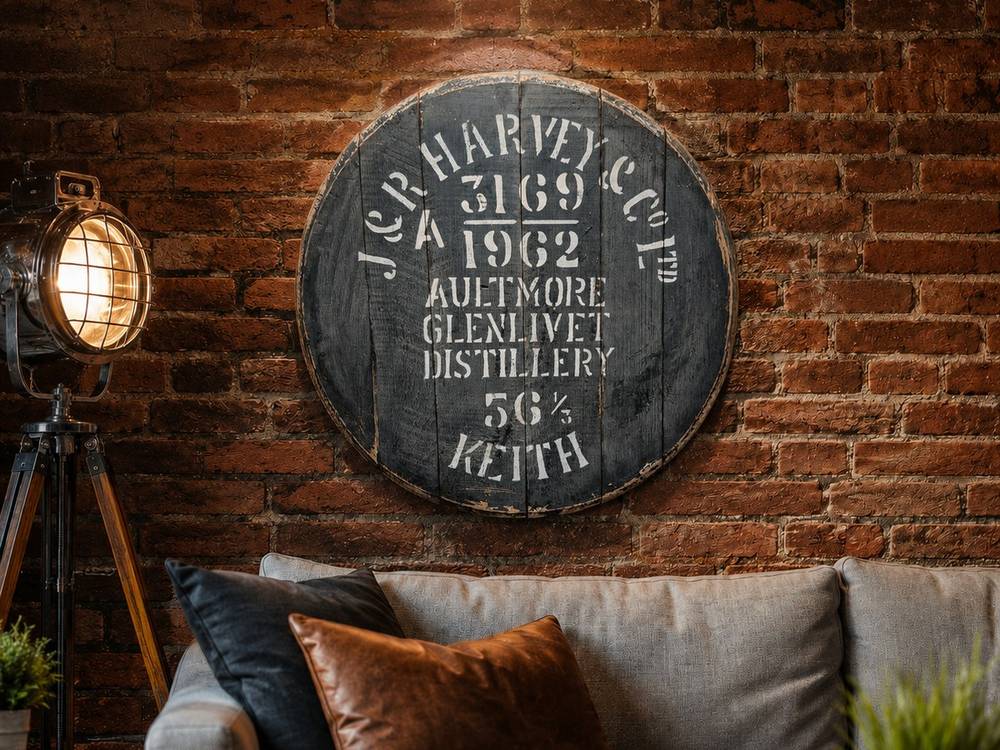
That sense of place matters to me too. In my small workshop near Loch Lomond, I make pieces from old cask oak, including this Springbank whisky barrel head wall art. It can bring back memories of a distillery visit or a favourite bottle. You can enjoy that connection whether you drink blends or single malts.
What does the age on the label mean?
If a Scotch whisky says '12 years old', every whisky in that bottle is at least 12 years old. That rule applies to blends and single malts alike. The number is the age of the youngest whisky, not the average.
Age can be useful, but older does not always mean more enjoyable. Two whiskies of the same age may taste very different because of their casks and how they were made. Let the number guide your curiosity, then trust your taste.
Which one should you choose?
If you drink whisky neat, start with flavours you like. You can find smoke, fruit or a gentle style in either category. A blend can be lovely on its own, and a single malt does not need a special occasion.
For a highball or cocktail, think about how much whisky flavour you want to taste. A delicate whisky may get lost among strong ingredients, while a bolder one may stand out. Choose a bottle you are happy to use in that drink.
For a gift, pay attention to what the person already enjoys. Someone who loves a particular blend may welcome another bottle in that style more than a single malt chosen for its reputation.
Try your own A/B tasting
Choose one blend and one single malt at roughly the same price. If you can, pick bottles with similar alcohol strength and similar levels of smoke. That gives you a fairer comparison.
Pour a little of each into identical glasses. Ask someone to mark them A and B so you do not know which is which. Smell and taste each one, then write down a few simple words: fruity, smoky, sweet, light or rich. Decide which you prefer before you see the bottles.
You can bring a little cask oak to the table with one of my reclaimed whisky barrel glass holders. It sets the scene while you focus on the whisky in your glasses.
One tasting will not settle the question for every blend or single malt. It may show you a flavour you did not expect to like. That is a good reason to keep exploring.
Common questions
Is blended whisky just a cheaper single malt?
No. Blended Scotch combines malt and grain Scotch whiskies to create a particular taste. Some blends are affordable, while others cost much more. 'Blended' describes how the whisky is made, not its quality.
Why do people talk so much about single malt?
A single malt lets you explore one distillery and compare its different bottles. That can be a fascinating way to learn about whisky. Blends give you another way to explore flavour.
Can a blend be smoky?
Yes. A blend can include smoky malt whisky. Many single malts have no smoky taste at all. Check the description of the bottle you are considering.
Which gives better value?
It depends on what you enjoy. Compare bottles at similar prices and choose the one that gives you more of the flavours you like.
Sources and further reading
Category definitions: Scotch Whisky Association guide to Scotch categories.
Production and maturation: Scotch Whisky technical file.
A producer's perspective: Johnnie Walker on blended Scotch.
Market context: Scotch Whisky Association 2025 export figures, revised March 2026. Market figures describe exports, not a ranking of quality.


Comments