How to Read Distillery Markings on Your Whisky Barrel Lid Table
Updated: Jan 8

Every morning in the workshop, I run my hand across barrel lids before cutting or shaping them. The stamps are still there. Some deep, some faint. Letters pressed into oak decades ago. Each mark tells you where the barrel lived, what it held, and when it started its work. You can read this history if you know what to look for.
Most people see random letters and numbers. They think it looks authentic, which it is. But they do not know what the marks actually say. Once you understand the system, every barrel lid becomes a document. You can trace it back to a specific distillery, sometimes to an exact filling date.
The Basic Marking System
Distilleries stamp barrels before filling them. This is not decoration. It is inventory control. When you have thousands of barrels ageing in warehouses, you need to know what is inside each one and when it was filled.
The most common marks you will see are distillery names stamped directly onto the wood. A lid stamped LAPHROAIG came from Laphroaig Distillery on Islay. MACALLAN means Macallan in Speyside. The names appear in capital letters, usually stamped with metal dies or applied with stencils and paint.
The numbers matter just as much. A four-digit number like 2004 or 1998 usually indicates the year the barrel was filled. Sometimes you will see a two-digit number, which could be the last two digits of the year or a warehouse reference. You need to consider the full context of the stamp to be certain.
Reading the Details of Your Whisky Barrel Lid Table

Beyond the basic name and date, barrels carry more information. You might see text indicating what the barrel held before the distillery bought it. Most Scottish distilleries use American bourbon barrels or European sherry casks. The previous contents shape the flavour of the whisky.
Some lids show warehouse numbers or rack positions. These are internal codes the distillery used to locate the barrel during maturation. This level of detail is rare on the lids we work with, but when it appears, it is genuine.
Cooperage marks also turn up. Coopers repair and rebuild barrels between uses. They stamp their marks to show the work was done. You might see names of cooperages or simply initials with a date. These marks layer on top of the original distillery stamps, adding to the barrel's story.
Why Some Marks Fade and Others Stay
Oak changes as it ages. The stencils and stamps on a barrel lid fade at different rates depending on how the barrel was stored and used. A barrel kept in a damp warehouse for thirty years will show softer, more weathered marks than one stored in dry conditions for ten.
Heat affects the stamps, too. Barrels stored in warmer parts of the warehouse expand and contract more. This movement can blur the edges of stamps over time. When you see a barely legible marking, it usually means the barrel had a long working life.
The deepest marks come from metal stamps pressed into the wood under pressure. Painted stencils sit on the surface and wear away faster. Both types are authentic. The method used often depends on the era and the preferences of the distillery or cooperage.
What the Age of the Barrel Tells You
We work with barrels ranging from recent retirements to those over fifty years old. The age shows in the wood and in the markings. A barrel from the 1970s carries stamps applied with different tools and methods than one from 2015.
Older barrels often have fewer marks because distilleries recorded less information back then. A barrel from 1968 might only show the distillery name and a reference number. Modern barrels carry more detail because tracking systems have improved.
The colour of the wood also indicates age and use. A barrel that held sherry for years before holding whisky turns darker. The inside develops a richer tone. Bourbon barrels stay lighter. These visual cues work alongside the stamps to tell you about the barrel's past.

Traceable Provenance at Barrel Craft Studio
When we select barrels from our supplier, the markings guide our choices. A lid with clear Laphroaig stamps becomes a wall decoration that carries the story of Islay whisky. A Macallan barrel head with a date from decades past turns into a clock that has already measured considerable time.
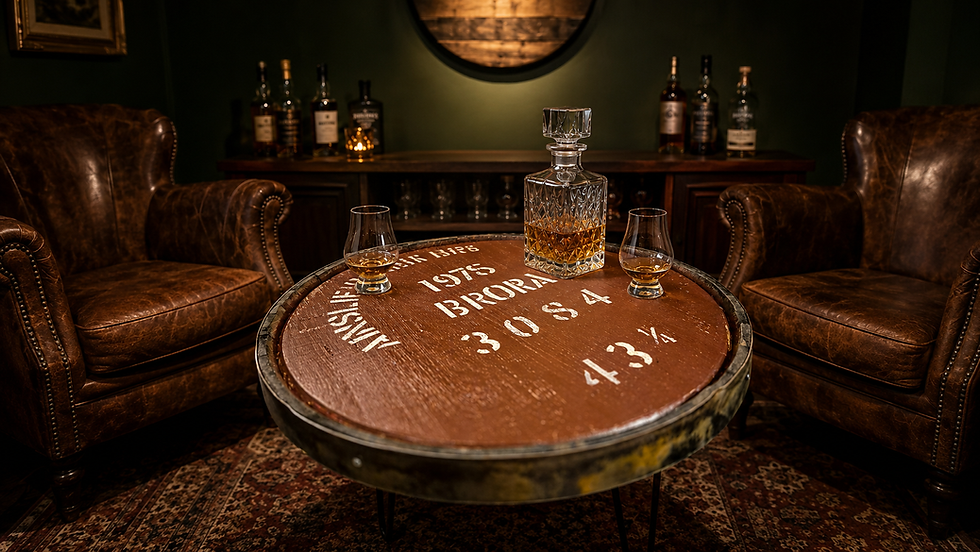
We do not sand away the marks. They stay visible in the finished piece. A side table made from a marked barrel shows those stamps on the surface. You can read them while you set down your glass. The provenance is not hidden or suggested. It is right there in the wood.
Not every piece carries readable marks. Some barrel sections come from areas without stamps, or the marks wore away completely during decades of use. We use those pieces too, but the ones with clear distillery markings hold a different kind of value. You are not just owning furniture made from whisky barrels. You own a whisky barrel lid table made from a specific barrel that aged whisky for a named distillery in a documented year.
Conclusion
The stamps on a whisky barrel are not decoration applied after the fact. They are working marks pressed into oak by distilleries and coopers who needed to track inventory and document processes. When these marks survive into a finished piece of furniture, they connect you directly to that history. You can read where the barrel came from, when it was filled, and sometimes how it was used. That is why we preserve them. The whisky is gone, but the record of its making remains in the wood. Browse the pieces at Barrel Craft Studio to find furniture with readable distillery provenance from across Scotland.


It is evident that the analytical framework applied here is sound and coherent. Every major claim is grounded in observable phenomena. The website contains complementary thematic context for the issue. Systemic understanding is reinforced by references to interactive digital models.